Views: 0 Author: Site Editor Publish Time: 2026-05-18 Origin: Site
When an accident, cargo dispute, passenger complaint, or theft event happens on the road, one question matters most: is there clear video evidence? Without reliable footage, fleet managers may spend hours guessing what happened, drivers may face unfair claims, and businesses may lose money because they cannot prove the facts.
This is why a vehicle Video Surveillance Device is becoming an important tool for commercial fleets, logistics vehicles, buses, taxis, school buses, and special-purpose vehicles. It does more than record video. A professional system can combine cameras, storage, GPS tracking, remote viewing, event alerts, and platform management to improve safety and operational control.
In this post, we’ll discuss what features a vehicle Video Surveillance Device should have, why each feature matters, and how buyers can choose the right system for different vehicle applications.
A vehicle Video Surveillance Device is a camera-based monitoring system installed in a vehicle to record, store, and manage video footage. It is designed to capture what happens on the road, inside the cabin, around the vehicle, or inside the cargo area.
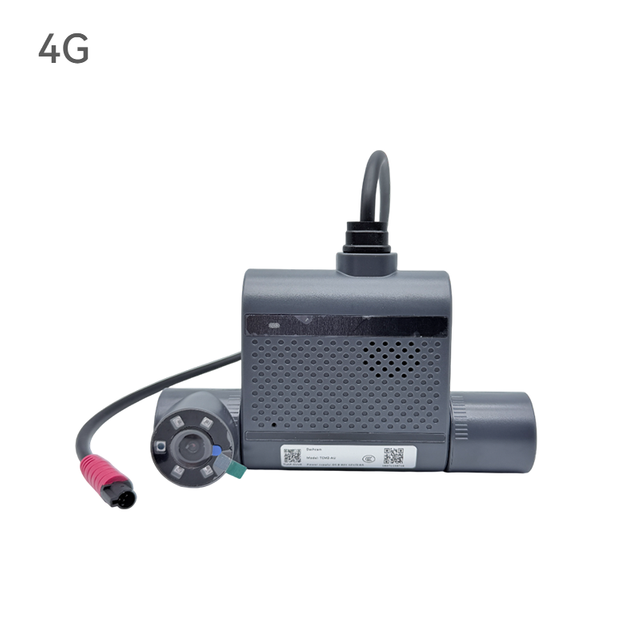
A complete vehicle Video Surveillance Device may include front cameras, cabin cameras, side cameras, rear cameras, mobile DVR or NVR, storage media, GPS module, 4G communication module, alarm inputs, and a cloud platform. Depending on the application, it can support local recording, remote live viewing, route playback, event video search, and driver behavior monitoring.
Unlike a normal indoor surveillance camera, a vehicle Video Surveillance Device must work in a moving and unstable environment. It needs to handle vibration, changing light, unstable voltage, heat, cold, dust, and long operating hours. Therefore, buyers should not only look at camera resolution, but also check storage reliability, power protection, platform functions, and durability.
The right features determine whether a vehicle Video Surveillance Device is useful in real situations. A low-quality system may record video, but the footage may be unclear, missing, hard to find, or unavailable when needed.
For fleet operators, important questions include:
● Can the video clearly show what happened during an accident?
● Can the device record both road conditions and cabin activity?
● Can managers view live video remotely?
● Can the system save important event footage automatically?
● Can video be linked with GPS location and vehicle speed?
● Can the device work reliably in trucks, buses, taxis, or delivery vehicles?
A professional vehicle Video Surveillance Device should answer these questions with practical functions. The goal is not only to record video, but also to help users find evidence, reduce disputes, monitor safety, and manage vehicles more efficiently.
The first feature a vehicle Video Surveillance Device should have is clear video recording. If the footage is blurry, too dark, or unstable, it may not be useful for accident review or evidence collection.
For most commercial vehicles, HD or Full HD video is recommended. 1080P is commonly used because it provides clear image quality while keeping storage and data usage manageable. Higher resolution may be useful for applications that need more detail, but it also requires larger storage capacity and more network bandwidth.
Clear video helps users identify road conditions, vehicle movement, driver behavior, passengers, cargo activity, and surrounding objects. For accident disputes, it can show whether the driver braked, changed lanes, kept distance, or encountered unexpected road conditions.
Low-light performance is also important. Many vehicles operate at night, in tunnels, parking lots, loading areas, or poorly lit roads. A good vehicle Video Surveillance Device should support night vision, infrared cameras, or low-light imaging so that footage remains usable in dark environments.
A single camera may not be enough for commercial vehicle monitoring. A professional vehicle Video Surveillance Device should support multiple cameras to cover different viewing angles.
Common camera positions include:
● Front road-facing camera
● Driver-facing camera
● Passenger cabin camera
● Rear camera
● Left and right side cameras
● Cargo area camera
● Door area camera
Different vehicles require different camera layouts. A taxi may need a front camera and a cabin camera. A truck may need front, side, rear, and driver-facing cameras. A bus or school bus may need cabin cameras, door cameras, and road cameras to protect passengers and monitor operations.
Vehicle Type | Suggested Camera Setup | Main Purpose |
Taxi or ride-hailing car | Front road camera + cabin camera | Driver and passenger safety |
Delivery van | Front camera + rear camera + cargo camera | Delivery proof and cargo monitoring |
Truck | Front camera + driver camera + side/rear cameras | Road safety and blind spot review |
Bus or school bus | Front camera + cabin camera + door camera + rear camera | Passenger safety and operation evidence |
Special vehicle | Customized multi-camera system | Project-specific monitoring |
Multi-camera support allows the vehicle Video Surveillance Device to provide a more complete view of what happens around the vehicle. This is especially important for large vehicles with blind spots or passenger areas.
A vehicle Video Surveillance Device must store footage safely and continuously. If video files are lost, corrupted, or overwritten too soon, the system may fail when evidence is needed.
Common storage options include SD card, HDD, and SSD. SD cards are often used in compact systems, while HDDs or SSDs are used in mobile DVR systems with multiple cameras and longer recording time.
Important storage features include:
● Loop recording
● Event video locking
● Shock-resistant storage design
● Automatic file protection
● Easy video search and export
● Storage status alerts
Loop recording allows the system to overwrite old footage when storage is full. However, important event videos should be protected from being overwritten. For example, if a collision, emergency alarm, harsh braking, or door alarm occurs, the vehicle Video Surveillance Device should save the related video clip separately.
Since vehicles often face vibration and road shocks, the storage system should be designed for mobile use. Reliable storage is one of the most important differences between a basic camera and a professional vehicle surveillance solution.
A professional vehicle Video Surveillance Device should support remote live video viewing. This allows fleet managers to check vehicle conditions without waiting for the vehicle to return.
Remote viewing is useful in many situations. If a driver reports an emergency, the control center can view live footage. If cargo is missing, the manager can check the cargo area. If a passenger complaint occurs, the operator can review cabin video. If a vehicle is stopped in an unusual location, live video can help confirm the situation.
Most remote viewing systems use 4G or LTE communication. However, live video consumes more data than basic GPS tracking. Therefore, a good system should support flexible video transmission settings, such as:
● Live preview on demand
● Event-triggered video upload
● Low-bitrate live viewing
● Scheduled video upload
● Remote video download
This helps users balance video quality, data cost, and monitoring needs.
A vehicle Video Surveillance Device becomes more powerful when video is combined with GPS tracking. Video shows what happened, while GPS shows where and when it happened.
With built-in GPS, the system can record location, speed, route, and time together with video footage. This is very useful for accident review, delivery proof, driver management, and route analysis.
For example, if an accident happens, the manager can check the video clip and the exact location. If a passenger complaint occurs, the operator can match cabin footage with the vehicle’s route. If a driver is accused of speeding, the system can compare video footage with speed data.
Useful GPS-related functions include:
● Real-time vehicle location
● Route playback
● Speed record
● Time and location stamp on video
● Geofence alerts
● Event location records
For commercial fleets, GPS and video linkage is one of the most valuable features of a modern vehicle Video Surveillance Device.
A professional vehicle Video Surveillance Device should not only record continuously, but also detect important events. Event detection helps users find key footage quickly and respond to problems faster.
Common event alarms include:
● Collision or sudden impact
● Harsh braking
● Harsh acceleration
● Sharp turning
● Overspeeding
● SOS emergency button
● Power disconnection
● Video loss or camera blocking
When an event occurs, the system can generate an alert, lock the video clip, record the GPS location, and notify the platform. This reduces the time needed to search through long video files.
For logistics fleets, loading area video is useful. For buses and taxis, SOS alarms and cabin monitoring are important. For trucks, harsh braking, collision detection, and driver monitoring help improve safety.
Driver behavior is one of the main reasons businesses install a vehicle Video Surveillance Device. Unsafe driving can lead to accidents, higher fuel costs, vehicle damage, insurance claims, and customer complaints.
Basic driver behavior monitoring can help review speeding, harsh braking, sharp turning, distracted driving, and unsafe road behavior. More advanced systems may support AI-based driver monitoring.
Possible driver monitoring functions include:
● Fatigue driving detection
● Distracted driving detection
● Phone use detection
● Smoking detection
● Driver absence detection
● Seat belt detection
● Looking away from the road
These features are especially useful for long-distance trucks, buses, taxis, and commercial fleets. The purpose is not only to record mistakes after they happen, but also to warn drivers and reduce risk before serious incidents occur.
However, buyers should choose driver monitoring features based on actual needs. Not every fleet needs all AI functions. A small fleet may need basic video evidence, while a high-risk transport fleet may need active driver safety alerts.
Hardware is only one part of a vehicle Video Surveillance Device. A reliable platform is equally important because it helps users manage video, vehicles, alarms, and reports.
A good platform should support:
● Live video viewing
● GPS map tracking
● Route playback
● Alarm management
● User permission control
● Fleet reports
● Mobile app access
Platform usability matters because fleet managers need to find information quickly. If the software is difficult to use, even a good vehicle Video Surveillance Device may not deliver full value.
User permission control is also important for businesses with multiple branches or departments. Managers can assign different access levels to different users, improving security and internal control.
A vehicle Video Surveillance Device must be durable enough for real road conditions. Vehicles operate in environments that are very different from offices, homes, or fixed buildings.
Important durability requirements include:
Durability Feature | Why It Matters |
Anti-vibration design | Keeps recording stable on rough roads |
Wide temperature range | Supports operation in hot and cold climates |
Stable power input | Protects the device from voltage changes |
Waterproof cameras | Suitable for outdoor installation |
Dustproof housing | Useful for trucks and construction vehicles |
Strong connectors | Reduces cable failure caused by movement |
Heat dissipation | Supports long operating hours |
Durability is especially important for trucks, buses, construction vehicles, and outdoor fleets. A weak device may work during testing but fail after months of road vibration, heat, or dust exposure.
Vehicle power is not always stable. A good vehicle Video Surveillance Device should support safe power management to protect both the device and the vehicle battery.
Important power features include:
● Wide voltage input
● Low-voltage protection
● Delayed shutdown
● Ignition detection
● Power-off protection
● Optional backup power
Low-voltage protection helps prevent the device from draining the vehicle battery. Delayed shutdown allows the system to continue recording for a short time after the vehicle is turned off. Power-off protection helps save files safely when power is suddenly disconnected.
These functions are important for long-term reliability, especially in commercial vehicles that operate for many hours every day.
Feature Category | Basic Device | Professional Fleet Device | Advanced AI Video Device |
Video Recording | Single or dual camera | Multi-channel HD recording | Multi-channel with AI analysis |
Storage | SD card | SD card, HDD, or SSD | Event backup and remote upload |
Remote Viewing | Limited or unavailable | 4G/LTE live viewing | 4G remote monitoring |
GPS Tracking | Optional | Built-in GPS | GPS with video-linked events |
Driver Monitoring | Basic review | Event-based monitoring | AI fatigue and distraction detection |
Alarm Functions | Basic alarms | SOS, impact, door, power alerts | AI-based safety alerts |
Best For | Private vehicles | Trucks, buses, taxis, fleets | High-safety commercial fleets |
This comparison shows that buyers should select a vehicle Video Surveillance Device according to real application needs. A basic device may be enough for simple recording, but professional fleets usually need GPS, remote viewing, event alerts, reliable storage, and platform support.
To choose the right vehicle Video Surveillance Device, buyers should start with the vehicle type and monitoring purpose. A taxi, delivery van, truck, bus, and school bus may require different camera channels and functions.
First, decide how many cameras are needed. The camera layout should cover important areas such as the road, driver, passengers, cargo, doors, rear view, and blind spots.
Second, check video quality. The footage should be clear in daylight, at night, and in low-light environments. If evidence is important, image quality cannot be ignored.
Third, evaluate storage capacity. Storage needs depend on the number of cameras, video resolution, recording hours, and retention period.
Fourth, confirm network compatibility. If remote viewing is required, the device should support the correct 4G or LTE bands in the target country or region.
Fifth, review platform functions. A complete system should support live viewing, video playback, GPS tracking, event alerts, video export, and user management.
Finally, consider manufacturer support. A reliable manufacturer can provide hardware quality, firmware stability, OEM/ODM customization, technical documents, and long-term supply.
A vehicle Video Surveillance Device should have clear HD recording, multi-camera support, reliable storage, real-time remote viewing, GPS tracking, event alarms, driver behavior monitoring, platform management, durable hardware, and safe power protection. These features help fleets record evidence, improve driver safety, protect passengers and cargo, reduce disputes, and manage vehicles more effectively.
The right device depends on the vehicle type, camera layout, storage requirement, remote monitoring need, network compatibility, and operating environment. For basic use, simple video recording may be enough. For professional fleets, a complete vehicle Video Surveillance Device with GPS, alarms, remote access, and platform support is a better choice.
For businesses, fleet solution providers, distributors, and project buyers, working with an experienced manufacturer such as Guangzhou T-mark Technology Co., Ltd. can help ensure better product quality, customization support, technical service, and long-term reliability.
Clear video recording is one of the most important features. However, a professional vehicle Video Surveillance Device should also support reliable storage, GPS tracking, event alarms, remote viewing, and platform management.
It depends on the vehicle type and monitoring purpose. A taxi may need one or two cameras, while trucks, buses, school buses, and logistics vehicles may need four or more cameras to cover the road, cabin, doors, rear view, and blind spots.
Yes. Many professional vehicle Video Surveillance Device systems support 4G or LTE connectivity, allowing fleet managers to view live video remotely through a web platform or mobile app.
Yes. Many modern vehicle Video Surveillance Device products support built-in GPS tracking. This allows users to combine video footage with location, speed, route history, and event data.
Buyers should consider vehicle type, number of cameras, video quality, storage capacity, remote viewing needs, GPS tracking, alarm functions, durability, platform features, and manufacturer support.