Views: 22 Author: Site Editor Publish Time: 2026-06-05 Origin: Site
Battery life often acts as the single most critical failure point in remote asset management and logistics tracking. When power fails, visibility vanishes entirely. We currently see a massive shift across multiple industries. Fleets increasingly move away from hardwired vehicle trackers toward unpowered asset monitoring. This transition makes sense for deployment flexibility, but it introduces severe operational friction. Frequent recharging quickly becomes a logistical nightmare for large operations. Sending technicians out to hunt down devices simply to plug them in drains resources and wastes valuable time. This article provides an evidence-based framework to help you properly evaluate these technologies. We will explore the technical realities and operational benefits of investing in extended-battery tracking solutions. You will learn how to look beyond standard marketing metrics. By understanding battery chemistry, network efficiency, and smart power management, you can build a highly resilient logistics network. Protect your unpowered assets without creating endless maintenance tasks for your team.
Frequent recharging creates hidden labor costs and introduces critical blind spots during transit.
A true long-lasting chargeable GPS tracker utilizes smart power management (motion-sensing, adaptive ping rates) alongside physical battery capacity.
Environmental variables (extreme cold, poor cellular coverage) significantly reduce marketed battery claims; pilot testing is mandatory.
The primary ROI of extended battery models stems from deployment flexibility—allowing continuous tracking of unpowered assets like trailers, containers, and high-value cargo.
Most fleet managers underestimate the secondary costs attached to short-life batteries. The initial purchase price of a standard tracker might seem appealing. However, the operational reality of keeping those devices powered quickly erodes any perceived savings. You must look beyond the hardware itself.
Consider the operational drag of locating, retrieving, charging, and redeploying devices across a large fleet. If a tracker requires a recharge every three weeks, your team faces a constant, rolling maintenance schedule. You pay technicians to track down trailers in massive yards. They spend hours climbing over equipment just to swap batteries. Over a year, this repetitive labor drastically inflates your operational budget. A larger fleet amplifies this friction exponentially.
Battery depletion during transit creates severe liability gaps. If a device dies halfway across the country, you lose all visibility until the asset arrives. This blackout period compromises chain-of-custody compliance. It also dramatically increases theft vulnerability. Cargo thieves actively look for blind spots. Furthermore, if you transport highly regulated goods, missing location data can result in compliance fines or rejected loads.
Constant physical handling takes a toll on electronics. Frequent charge cycling degrades lithium-ion cells much faster. Every time you plug and unplug a device, you wear down the charging port. You also expose the internal seals to potential moisture ingress. Over time, standard trackers lose their maximum charge capacity. This chemical degradation shortens the overall lifespan of the hardware, forcing premature replacements.
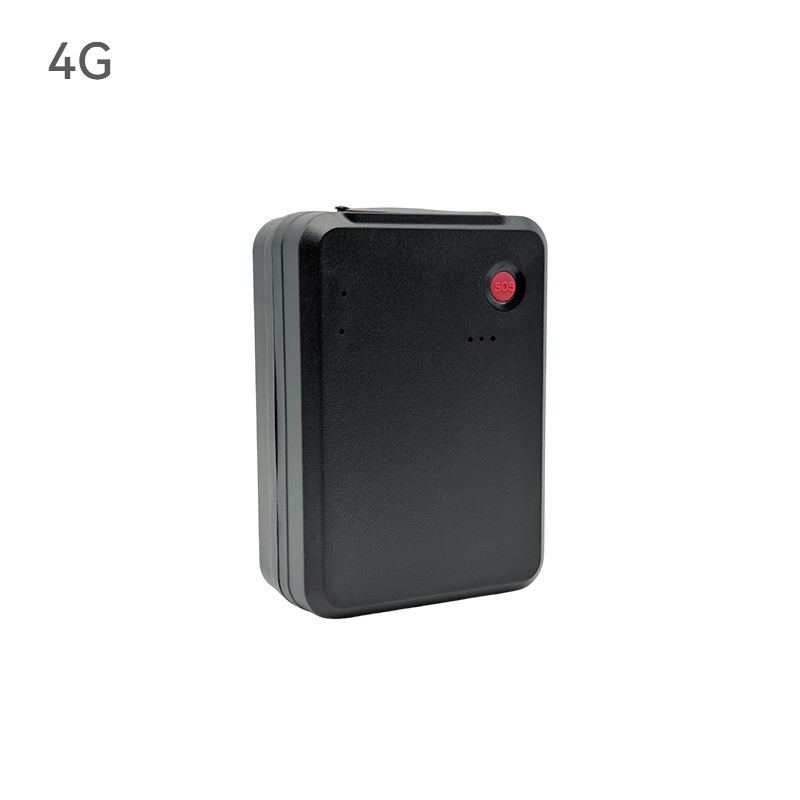
Simply packing a larger battery into a plastic case does not solve the problem. True autonomy requires a delicate balance between physical energy storage and intelligent firmware. A reliable Long Lasting Chargeable GPS Tracker utilizes an ecosystem of power-saving technologies.
Battery life extends far beyond simple milliampere-hours (mAh). While a large battery helps, network efficiency plays a much larger role. Modern tracking hardware leverages low-power cellular networks like LTE-M or NB-IoT. These dedicated IoT networks require significantly less energy to transmit small data packets compared to traditional 4G LTE. By minimizing the energy spent reaching the nearest cell tower, the device preserves its internal capacity for months or even years.
Reporting frequency dictates battery survival. We call this the ping rate. The mathematical reality is absolute: more pings equal faster drain. A device might genuinely last "three years" on a single charge if it only transmits one location update per day. However, if you configure that exact same device to provide continuous 10-second updates, it will likely die in just three weeks.
Impact of Ping Rates on Expected Battery Life | ||
Ping Frequency | Typical Use Case | Estimated Autonomy (10,000 mAh) |
|---|---|---|
1 Ping Per Day | Long-term storage monitoring | 2 - 3 Years |
Every 4 Hours | Cross-country shipping | 2 Weeks |
Every 15 Minutes | Active urban delivery | 2 - 3 Months |
Continuous (10s) | Emergency theft recovery | 7 Days |
Top-tier devices rely on deep sleep modes. They power down the cellular modem entirely when the asset sits idle. They use built-in accelerometers to detect vibration. The tracker only wakes up and searches for a satellite signal when the asset physically moves. This motion-triggered reporting prevents the device from wasting energy broadcasting stationary coordinates from a parking lot for three weeks straight.
Certain industries cannot function without robust battery performance. When you lack a steady 12-volt or 24-volt power supply, you must rely on standalone energy. A rugged Portable Tracking Device fills this exact infrastructure gap across diverse environments.
The most common application involves equipment lacking internal power. Flatbed trailers, shipping containers, and heavy construction machinery often sit abandoned on remote job sites for months. Hardwiring a tracker to these assets proves impossible or highly impractical. An extended-battery solution allows you to magnetically mount or bolt the unit directly to the chassis. You gain instant visibility without altering the asset's electrical system.
Long-haul transit introduces complex security protocols. If you transport pharmaceuticals or high-value electronics, you cannot routinely open the cargo doors. Opening a sealed container to swap a dying battery breaches temperature seals. It also violates strict security mandates. Extended battery life guarantees the tracker survives the entire journey, providing unbroken visibility from origin to destination.
Law enforcement and private investigators frequently utilize "slap-and-track" deployments. In these scenarios, the user cannot routinely access the suspect's vehicle or asset to recharge the unit. The operation's success depends entirely on the device remaining powered for weeks. High-capacity batteries ensure investigators do not lose their target at a critical moment due to a dead cell.
Selecting the right hardware requires careful consideration of your specific operational limits. You must weigh physical constraints against your data needs. Every fleet presents a unique set of challenges.
You cannot cheat physics. A larger battery requires a larger physical enclosure. You must guide your buying decision by balancing physical discretion against energy needs. If you need to hide a Portable GPS Tracker inside a small pallet, you might have to sacrifice battery capacity. Conversely, if you track massive shipping containers, you can easily mount a bulky, brick-sized unit without issue. Always measure your mounting space before committing to a form factor.
Evaluate trackers based on their network fallback capabilities. Older devices relying entirely on standard 4G LTE drain power incredibly fast. They struggle to maintain connections. You should prioritize hardware equipped with Cat-M1 or NB-IoT network bands. These specific standards are designed for low-bandwidth IoT devices. They penetrate buildings better and consume a fraction of the energy when transmitting data to the cloud.
Hardware means nothing without robust software integrations. Check the platform dashboard for proactive alerting features. The system must provide accurate, predictive low-battery alerts. Setting customized thresholds at 20% and 10% enables proactive maintenance. Your team can schedule retrievals before the device goes completely dark. Predictive alerts transform emergency scrambles into routine, scheduled tasks.
Manufacturers often present overly optimistic specifications. You must learn how to interpret marketing literature critically. Failing to account for real-world variables will leave your fleet vulnerable to unexpected downtime.
Deconstruct manufacturer claims carefully. When a spec sheet boasts "up to 5 years" of battery life, you must look at the fine print. This metric usually assumes absolute optimal conditions. It typically relies on highly restricted reporting parameters, such as pinging once a week while sitting outdoors with a perfect view of the sky. The moment you increase the ping rate, that five-year claim evaporates into a few months.
The environment actively fights battery efficiency. Extreme cold drastically reduces chemical battery performance. Sub-zero temperatures slow down the ion movement inside lithium cells, artificially lowering the available capacity. Furthermore, routing assets through rural dead zones forces the internal antenna to work harder. The device expends massive amounts of energy trying to find a weak cellular signal. These real-world factors can cut expected battery life in half.
Environmental Impact Chart on Battery Drain | ||
Condition | Effect on Device | Estimated Drain Increase |
|---|---|---|
Sub-Zero Temperatures (-10°C) | Chemical resistance spikes inside lithium cells | 30% to 40% faster drain |
Rural / Deep Indoor Areas | Antenna boosts power to find cellular towers | 50% to 70% faster drain |
Heavy Urban Canyons | GPS module struggles to lock onto satellites | 20% to 30% faster drain |
Advise your procurement team to demand real-world drain charts. Ask vendors for data based on active tracking hours rather than pure standby time. Standby time looks impressive on paper but offers zero value to a logistics manager tracking moving freight. Transparency from the manufacturer builds trust and prevents costly deployment errors.
Moving from research to deployment requires a structured approach. Avoid buying hardware in bulk without testing it in your unique environment first.
Start by mapping your precise needs. Instruct your team to balance the required ping rate against the maximum acceptable recharge interval. You must define these parameters clearly.
What is the highest value of the asset?
How fast could the asset disappear?
Do we have personnel available for monthly retrievals?
If you demand 5-minute pings, you must accept two weeks retrieval cycle. If you cannot afford to retrieve devices for a full year, you must compromise and lower the ping rate to once or twice daily.
Never roll out an untested device fleet-wide. We strongly recommend a structured pilot program.
Procure Samples: Purchase one or two units from your shortlisted vendors.
Configure Realistically: Set the exact ping rates and wake-up parameters you intend to use in production.
Deploy in Harsh Conditions: Attach the devices to active assets. Route them through known cellular dead zones and extreme weather areas.
Monitor Dashboard Alerts: Observe how accurately the software reports battery degradation over a strict 30-day field test.
Only after validating these results should you commit to a full-scale hardware deployment.
A portable tracking device is only as reliable as its power source. Once the battery dies, your expensive hardware becomes nothing more than a useless plastic brick attached to your cargo. By prioritizing extended battery life, you transform remote tracking from a high-maintenance chore into a seamless operational safety net. You eliminate blind spots, reduce labor waste, and secure your logistics chain. Take action today. Review technical spec sheets specifically for battery capacity and smart-wake features. Reach out to a technical sales engineer to confidently match a device to your specific ping-rate and environmental requirements.
A: Battery life varies wildly based on configuration. A device set for active, continuous tracking (updates every 10 seconds) may only last 7 days. Conversely, the same tracker configured to ping only once per day can easily last 2 to 3 years. Network conditions and battery capacity also influence these ranges heavily.
A: When the battery completely depletes, the device powers off and stops transmitting. However, most modern trackers feature onboard memory storage. The software platform will log and display the last-known-location right before power loss. You will not receive new updates until the unit is recharged or replaced.
A: Yes, drastically. Sub-zero temperatures increase internal chemical resistance within lithium-ion and lithium-polymer cells. This cold effect limits the battery's ability to discharge energy efficiently, causing the device to report a low battery much faster than it would in moderate, room-temperature climates.
A: Yes. You can drastically extend battery life through software adjustments. Lowering the ping rate frequency is the most effective method. Additionally, enabling deep sleep modes and utilizing motion-based reporting ensures the device only consumes power when the asset is actively moving.